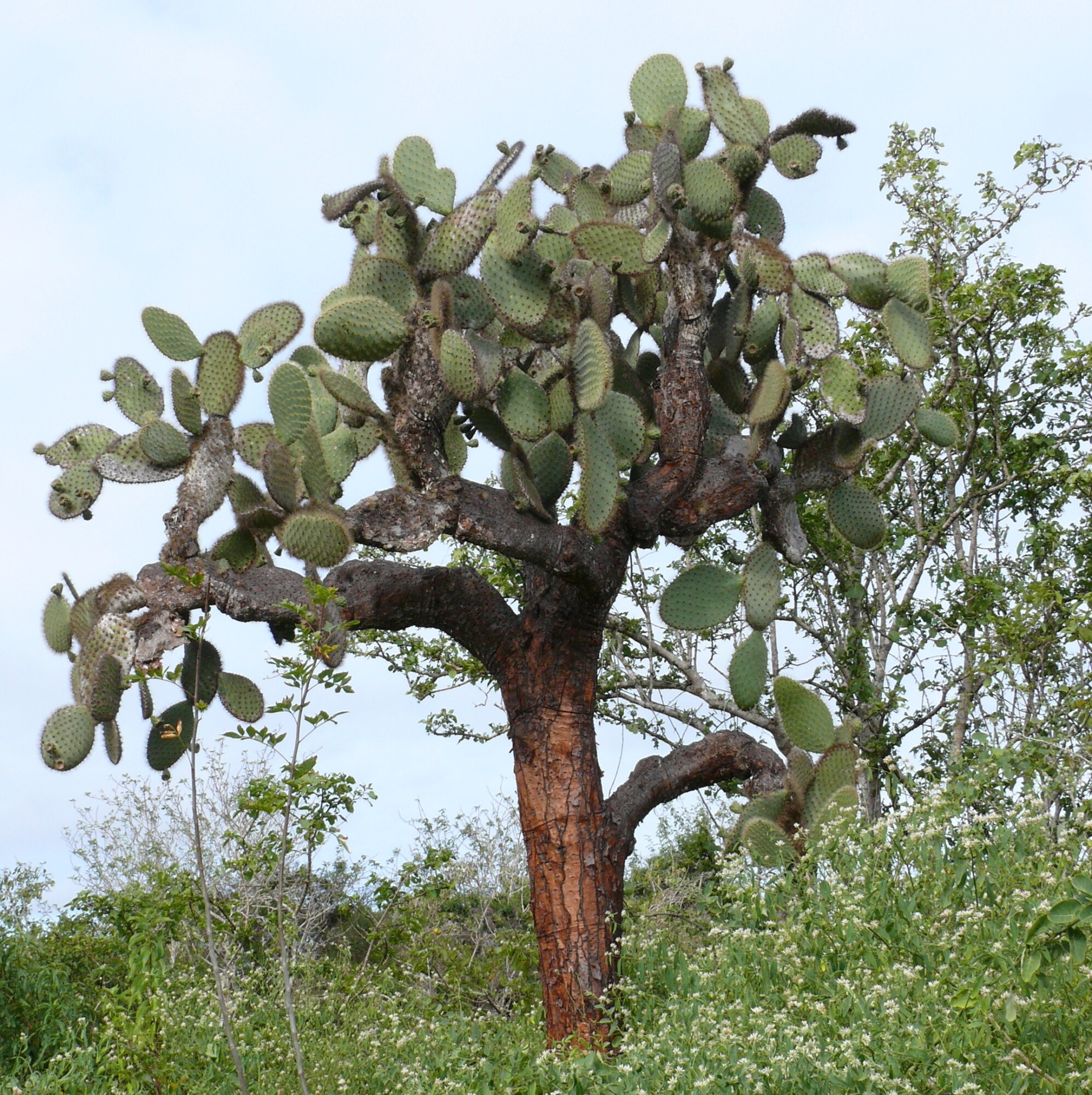
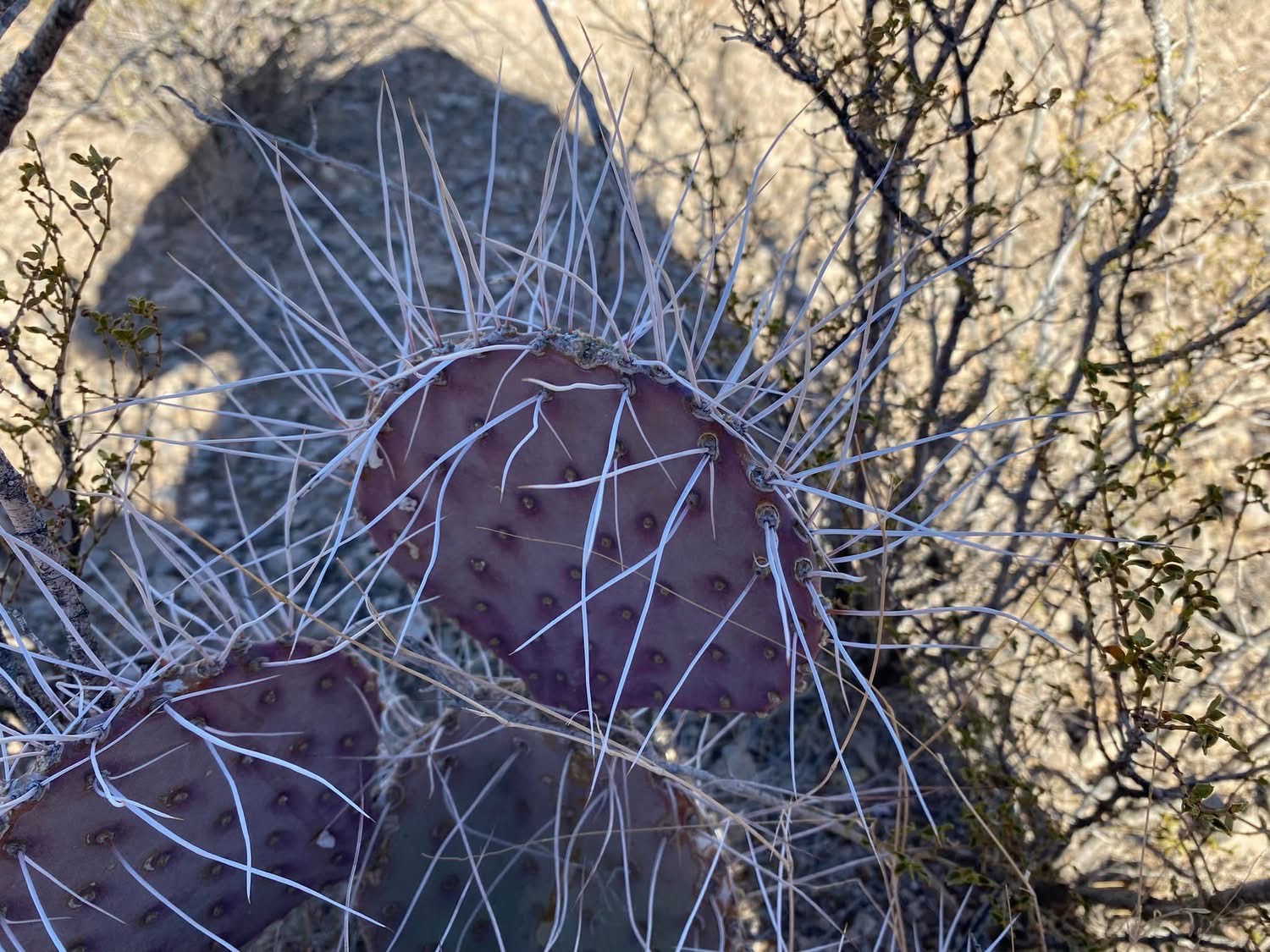
(Photograph = Opuntia atrispina)
Introduction
Opuntia—the prickly pears—earn their reputation the honest way. They thrive where summers bake, winters bite, and water plays hard to get. Pads store moisture, spines shade the skin, and flowers arrive in a rush of color that turns into sweet fruit. For a plant that looks tough as armor, Opuntia is surprisingly generous—to wildlife, to people, and to the patient gardener.
The Details
Prickly-pear pads are not leaves; they are modified stems called cladodes. Each pad carries areoles—the tiny growth points that produce spines, glochids, and new pads or flowers. Glochids are the fine, barbed bristles that do most of the mischief; they break off easily, so handle plants with tongs, not fingers. The architecture is modular: a pad grows, rests, then sets buds at the areoles for the next flush of pads or blooms. That modular design lets the plant ride out bad seasons and bounce back fast when rain returns.
The flowers are a show—satiny, often yellow, orange, or rose—with a circle of stamens that react to touch and a stigma that stands ready for pollen. Fruit follows, ripening to reds or purples, and feeding birds, mammals, and people wherever the plants grow. Pads, harvested young, cook down into crisp, bright nopales; fruit makes good jelly and a fine late-summer snack. In the wild, dense stands offer shelter for quail and small mammals, while roots strengthen loose soils on slopes and along washes.
Cold or heat, Opuntia takes both better than most succulents. Many species shrug off brief freezes, then motor through triple-digit days by opening their stomata at night—a water-saving trick that keeps daytime losses low. Forms range from prostrate mats to shoulder-high shrubs and, in a few species, small trees. Hybridization is common, which is one reason local populations can look so different from one valley to the next.
For gardens, think sun, air, and drainage. Plant high, not deep; use gravelly soil; and give pads plenty of space so air can move between them. Water to establish, then lean on deep, occasional soakings. When you need to prune or harvest, work slowly, use long tongs, and keep a roll of tape handy to lift stray glochids. With a little respect—and a little distance—Opuntia proves exactly what the name of your post claims: opuntias are cool.
Additional Reading: Medicinal Plant Fact Sheet for Opuntias